Hey there, Nteoniro here again.
In this post, I’ll be sharing my thoughts on a service that I use often that has made my life easy. Yeah, you guessed right, Barter by Flutterwave.
In case you are new around these payment streets and you haven’t heard about Flutterwave here’s a crash course: Flutterwave is a payment solutions company with two rockstar products: Rave and Barter. This post isn’t about the two of them though, I will only talk about Barter, the consumer product.
Yeah, so what is it?
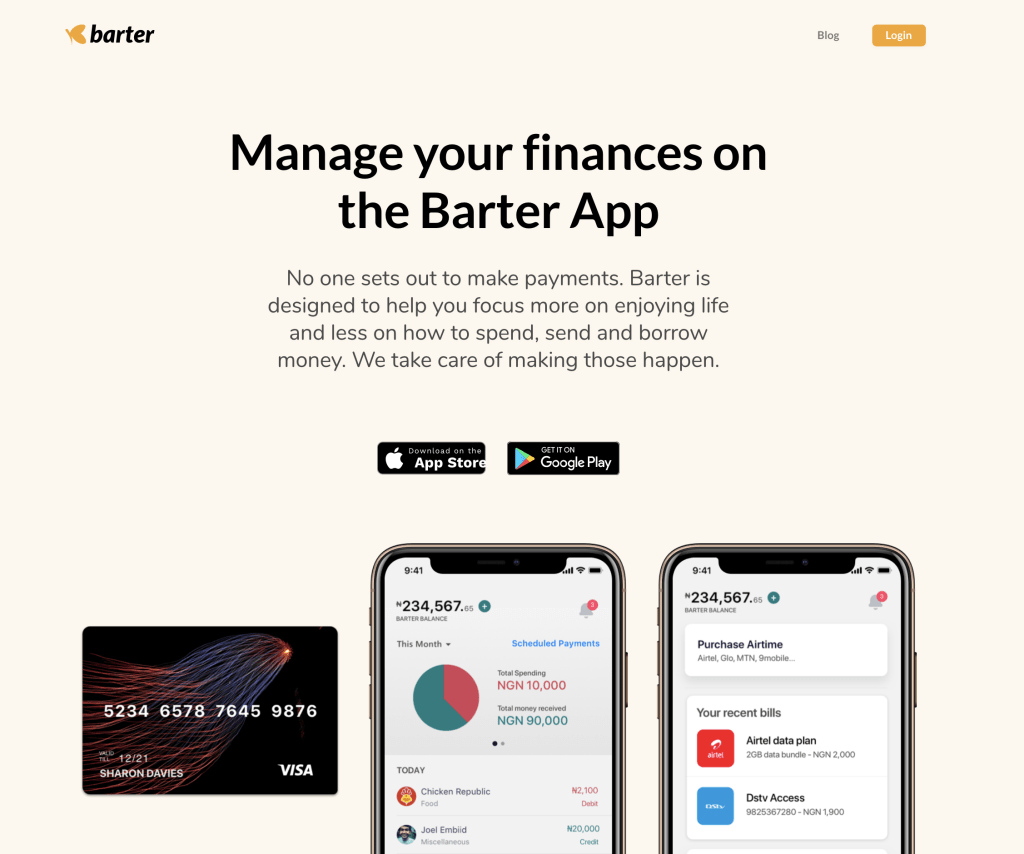
Barter is many things to many people but to me, Barter is the virtual card service that allows me to make payments online wherever Visa cards are accepted. The best thing about this for me is the fact that it stores all the details I need for a transaction on the app so I can always get access to it when I need to make a payment. This is important to me because I move around a lot and I forget the address I use on my bank account and so whenever I need to enter post codes or zip codes, it is a guessing game with could make my card be flagged for a fraudulent transaction. But that is not the case with Barter, it nests every information you need to complete a payment right under the card you are using to pay and payments are seamless.
Another reason I love using barter is because of the convenience. If you follow the news or are active on social media, you may have heard that some people were accused of fraud because they accepted laundered dollars from suspected fraudsters. With barter, that risk is mitigated because you can fund your dollar card with your regular bank card. And it even gets better, you can save your card after the first use and subsequent wallet funding will be done from your saved card(s). If mistakenly receiving laundered money isn’t something that can happen to you, the sheer convenience of being able to top up your card regardless of the time of the day is unmatched.
With my bank card, I pay an annual maintenance fee of $20 whether I use my card or leave it to gather dust. When I first applied for my card, I had to pay a $20 maintenance charge and then ~$3 for card issuance. Put together, my physical bank card cost me $23 before I could even make one payment. In contrast, I could have used that amount to fund my barter wallet and even make two payments for my Netflix subscription which would have only cost me a percentage on the funding amount up to a maximum of ₦200 (which is less than $1) and if I don’t use my barter card for a year, I don’t pay for maintenance only my barter premium subscription.
So what else?
Here’s an inside info nobody wants you to know but I will tell you… With a barter card, you get an American address to make your payments with. It’s double the utility, with a barter card you unlock the possibilities of Paypal and other services that restrict you from living like a true global citizen.
I don’t use a lot of the features barter has to offer so I can’t write about them but if you want a service that does not give up on you when you need to make important cross-border payments, then Barter is your gig. You can pay for cable TV (DSTV, GOTV), utility bills (Light and LCC tolls), internet (Swift, Smile, ipNX, Spectranet), airtime and data for the primary mobile networks, etc.
Also, if you sign up for Barter with the code 2348187026006 I get ₦25 for your benevolence 😉😉
 Niro's Blog